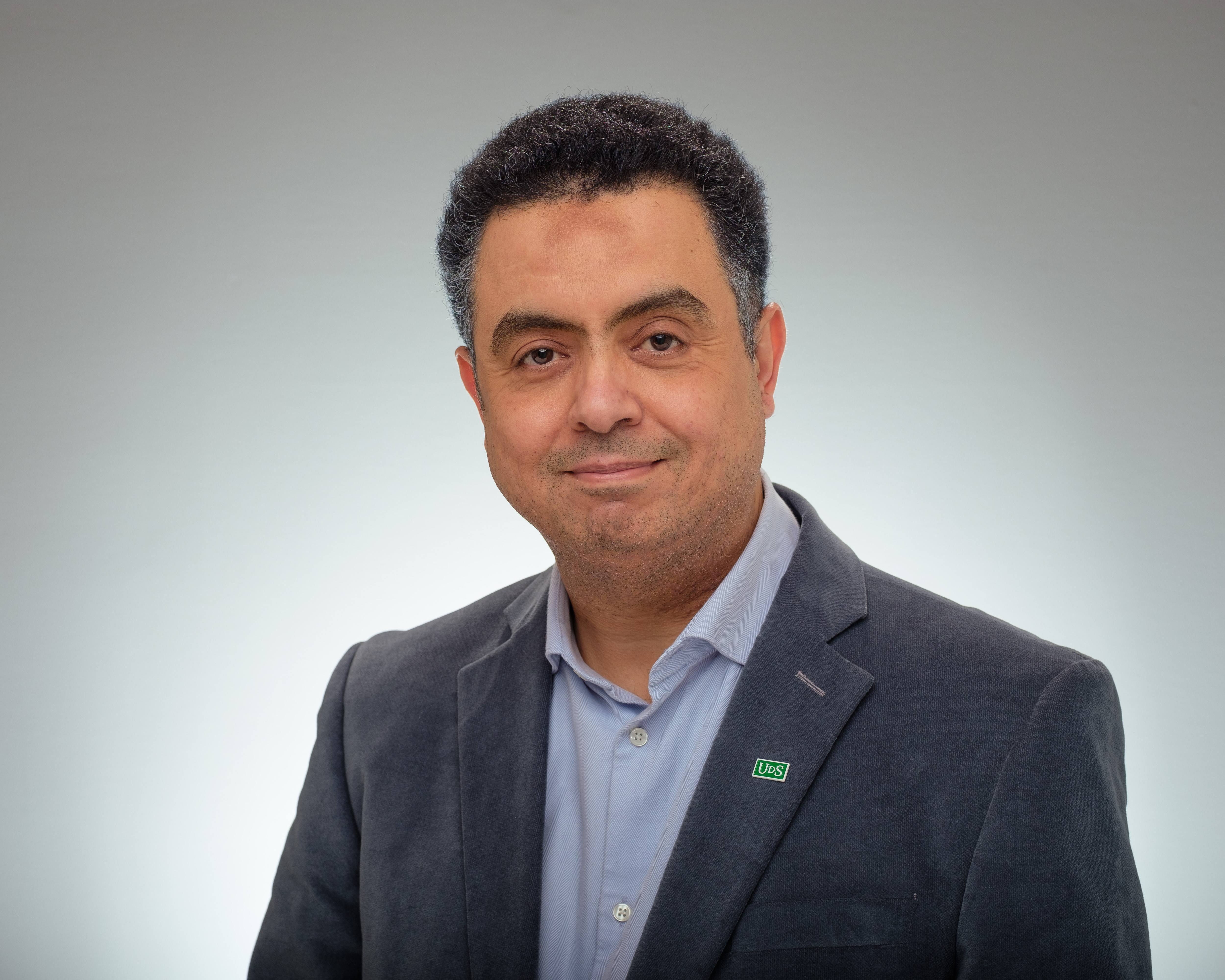
Aref Meddeb
Biography
Prof. Aref Meddeb received his degree in Electrical Engineering from the National Engineering School of Tunis (ENIT) in 1992, and his M.Sc. and Ph.D. degrees from École Polytechnique de Montréal in 1995 and 1998, respectively. He has held positions in both industry and academia, including at Alcatel, INRS-Télécommunications, Teleglobe, and Nortel.
He previously served as Full Professor and Director of the National Engineering School of Sousse, University of Sousse, Tunisia. He is currently Director of the Department of Electrical and Computer Engineering in the Faculty of Engineering at the Université de Sherbrooke, Canada, where he is also a member and Co-Director of the Intact Cybersecurity Centre of Expertise platform. His research interests span cybersecurity, the Internet of Things (IoT), post-quantum cryptography (PQC), cloud/fog/edge computing, and the Quantum Internet, with a particular focus on privacy, network security protocols, intrusion detection, quality of service (QoS), routing, and system design.
Prof. Meddeb was ranked for three consecutive years (2019–2021) among the top 2% of scientists worldwide in Networking and Telecommunications, according to a study by researchers at Stanford University. He has authored over one hundred scientific publications and has secured a dozen research grants. He is a Senior Member of the IEEE and a member of the Quantum-Readiness Working Group (QRWG) of the Canadian Forum for Digital Infrastructure Resilience (CFDIR).
Title
Can Tiny Devices Survive the Quantum Era? Post-Quantum Security for the Internet of Things
Abstract
Quantum computers powerful enough to break today's public-key cryptography may still be years away, but the threat is already real. Data intercepted now can be stored and decrypted later, and many IoT devices deployed today will still be in service when that day comes. In response, NIST published its first post-quantum cryptography standards in 2024, and the global migration has begun. But there is a catch: these new algorithms were designed with servers and laptops in mind, not with sensors running on batteries, medical implants, or long-range low-power networks that can only send a few bytes at a time.
This keynote offers an accessible tour of where we stand. It first explains, in plain terms, why quantum computers threaten current security and what makes post-quantum algorithms different. It then reviews the state of the art in adapting them to constrained devices, and draws on our own research to show what happens in practice: the energy cost of quantum-safe key exchange over LoRaWAN, the feasibility of post-quantum signatures in implantable medical devices, and end-to-end security for low-power networks. The talk concludes with the open challenges ahead, including crypto-agility, hybrid transition strategies, and the hard trade-offs between security, energy, and performance, and with what researchers, industry, and policymakers can do now.